
Wedding Plus-One Wording: Polite Indian Wedding Templates
Use clear wedding plus-one wording for invitations, WhatsApp and RSVPs, with polite templates for named guests, no plus-ones and capacity limits.
Wedding plus-one wording should state exactly who is invited, where the guest adds their companion's name, and whether the rule applies to every function. Clear language feels kinder than a vague invitation followed by an awkward refusal.
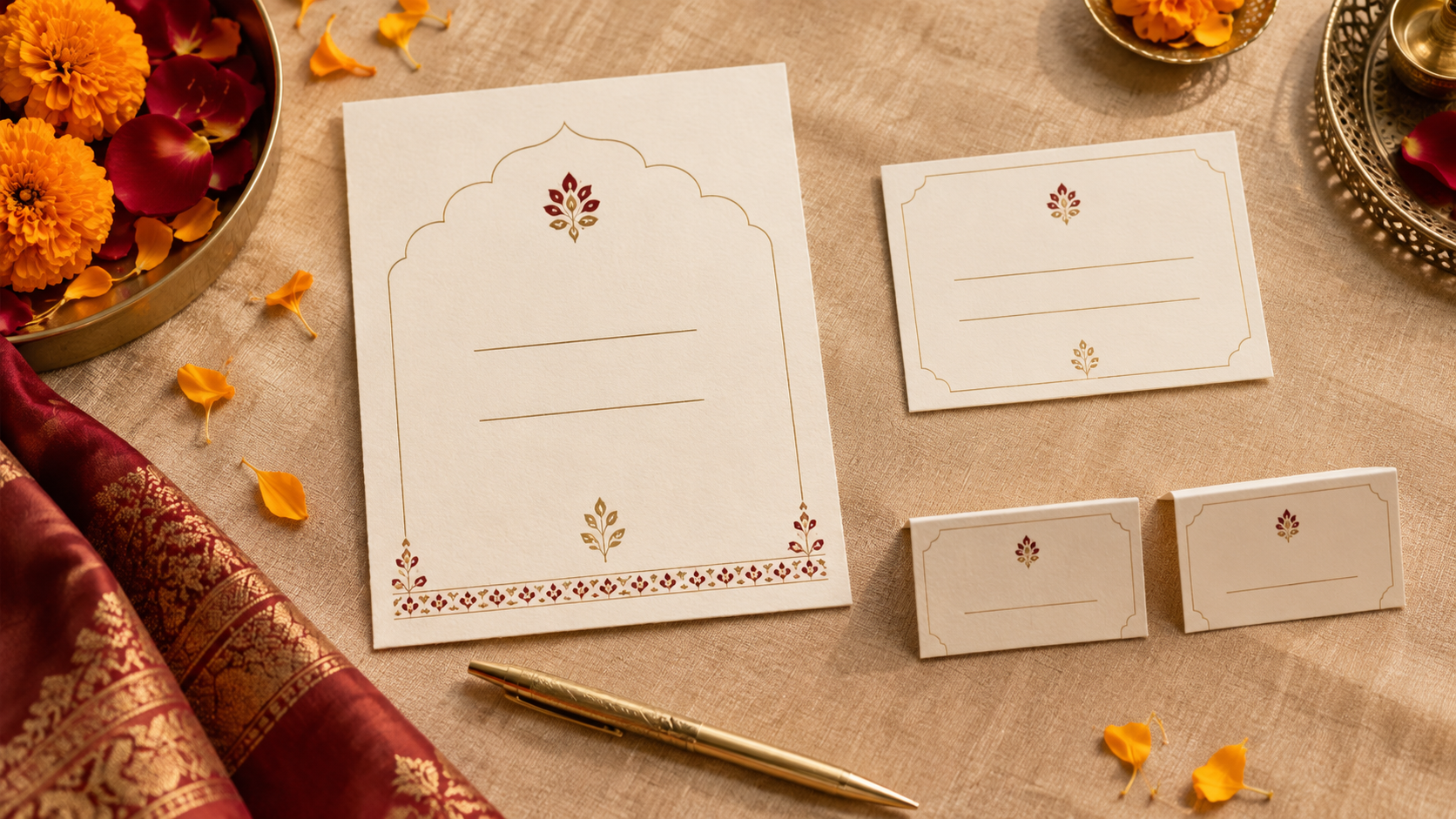
The fastest way to create a guest-list argument is to leave the plus-one rule implied. A guest reads “You are invited,” assumes their partner is included, books two flights, and discovers during RSVP that only one seat exists. What looked like polite ambiguity becomes a personal rejection.
Clear wedding plus-one wording prevents that mess. Name both people when both are invited. Use “and guest” only when the invited person may choose a companion. If no companion is included, say that only named guests can be accommodated. Put the same rule on the invitation, RSVP form, wedding website and family answer sheet.
The five-minute decision rule is simple:
| Situation | Best wording | | --- | --- | | You know the partner | Name both people | | Guest may choose anyone | “[Name] and guest” | | No plus-one | “Only guests named on the invitation” | | Companion invited to selected functions | Name the exact events | | Decision is not final | Wait before sending; do not imply an invitation |
Before writing messages, mark every guest as named partner, open plus-one, no plus-one, or event-specific plus-one in your wedding guest list template. That one field keeps the invitation, RSVP and venue headcount aligned.
How do you word a plus-one on a wedding invitation?
Name both invitees when you know who the companion is. When the guest may bring anyone, use “[Guest name] and guest” and give them space to enter the companion’s full name. If the invitation covers only selected functions, list those functions beside both names instead of relying on a general wedding invitation.
Wedding plus-one wording is the invitation language that tells a guest whether they may bring a companion, which events that person may attend, and how the companion should be added to the RSVP.
Use one of these copy-paste versions.
Named partner
Priya Sharma and Rohan Mehta are warmly invited to celebrate the wedding of [Couple] on [date]. Please confirm attendance for each function by [deadline].
Open plus-one
Priya Sharma and guest are warmly invited to celebrate with us. Please add your guest’s full name and event attendance when you RSVP by [deadline].
Plus-one for selected functions
Priya, your guest is warmly invited to the Sangeet and reception. The Haldi and wedding ceremony invitations are for you only because those venues have limited capacity.
WhatsApp version
Hi Priya, we would love for you to bring a guest to the Sangeet and reception. Please send us their full name and confirm both of your event choices by 15 November: [RSVP link].
Do not hide the companion behind “two seats reserved” unless the RSVP experience clearly shows who those seats are for. Names are easier for guests, planners, security teams and hotel desks to use.
How do you politely say no plus-ones at a wedding?
Say that capacity allows only the people named on the invitation, thank the guest for understanding, and stop there. A short operational reason feels less personal than a long defence. Never blame another family member or invent a venue rule that staff may contradict later.
Use this default wording:
Because our venues have limited capacity, we can accommodate only the guests named on each invitation. Thank you for understanding and helping us keep the celebration within our confirmed guest count.
Short invitation version:
Kindly note that this invitation is reserved for the named guest(s).
Warm WhatsApp version:
Hi [Name], we are keeping the guest list to the people named on each invitation because of venue capacity. We are sorry we cannot add another guest, and we really appreciate your understanding.
If children are handled separately, say so separately. “Named guests only” may still leave a parent wondering whether their children are included. Your wedding website FAQ should answer the plus-one and children questions as two distinct policies.
Avoid phrases such as “no random people,” “don’t bring anyone extra,” or “strictly no plus-ones.” They communicate the rule, but they also turn a capacity decision into a judgment about the guest.
Who should receive a plus-one at an Indian wedding?
There is no universal rule, but there should be one consistent decision framework. Treat spouses, fiancés and established partners as named guests where possible. Then decide whether open plus-ones go to guests travelling alone, members of the wedding party or people who will know almost nobody.
Use this checklist before approving exceptions:
- Is the companion a spouse, fiancé or established partner?
- Is the guest travelling internationally or attending alone?
- Will the guest know other people at the event?
- Does the venue have a hard capacity limit?
- Does adding one person trigger a hotel, shuttle or meal requirement?
- Have comparable guests received the same rule?
- Is the companion invited to all functions or only the larger ones?
For a 500-person Indian wedding, “one extra person” is rarely just one chair. It can affect invitation access, rooming, airport transfers, meal preferences, welcome bags and event security. Define the rule before invitations go out, then use the wedding guest communication plan to keep every family contact on the same answer.
How should the RSVP form handle plus-ones?
The RSVP form should show the permitted companion count automatically, ask for each person’s full name, and collect attendance by event. Do not let every respondent type an unlimited party size and expect the planning team to resolve it later.
For an open plus-one, collect:
- Companion’s full name.
- Mobile number if they need direct updates.
- Attendance for each permitted function.
- Dietary requirements.
- Hotel or transport needs, when included.
- The deadline after which the companion cannot be changed.
For a named partner, display their name rather than a generic “guest 2.” For no plus-one, do not show an “add guest” button. Interface wording should match the invitation rule exactly.
When responses are late, use a wedding RSVP reminder message that asks for both names and event choices:
Hi [Name], a quick reminder to confirm attendance for you and [Guest name] by [deadline]. Please select the functions each of you will attend so we can finalize meals and transport: [link].
How do you answer a guest who asks for an exception?
Answer privately, acknowledge the request and give a clear decision. If you need time, state when you will confirm. Do not say “we will see” and leave the guest planning travel around a seat that may never exist.
When the answer is no
Thanks for checking with us. Unfortunately, we cannot add another guest because the venue count is already fixed. Your invitation is for you only, and we hope you can still celebrate with us.
When there is a waitlist
Thanks for asking. We cannot confirm an additional seat today, but we will know after the RSVP deadline on [date]. Please do not make plans for a second guest until we confirm directly.
When the answer is yes for one event
We can include your guest at the reception, but the ceremony venue is at capacity. Please share their full name by [deadline], and we will add them to the reception RSVP.
Record every approved exception immediately. A private “yes” that never reaches the RSVP sheet creates the same day-of confusion as an unclear invitation.
Where should you publish the plus-one policy?
Put the personal answer on the invitation and RSVP form; put the general policy on the wedding website or guest FAQ. Use WhatsApp for reminders, not as the only source of truth. For multi-event weddings, the RSVP page should show access function by function.
| Channel | What it should say | | --- | --- | | Invitation | Exactly who is invited | | RSVP form | Allowed party size and event access | | Wedding website | General policy and deadline | | WhatsApp | Personal reminder or approved exception | | Mandap Chat | The same approved answer in natural language |
Mandap Chat can answer “Can I bring my husband?”, “Is my guest invited to Haldi?” and “Where do I add my partner’s name?” using the rules you approve. It should not reveal who else received a plus-one or expose the private guest list.
Upload the policy, event-access rules, RSVP deadline and one escalation contact. Then test common phrasings before sharing the concierge with guests. If you want plus-one, schedule, hotel and dress-code answers handled in one place, set up Mandap Chat and give guests one reliable link instead of five family phone numbers.
FAQ
How do you word a plus-one on a wedding invitation?
Name both guests when you know the companion. If the guest may choose someone, address it to “[Guest name] and guest” and provide two RSVP name fields. Also say whether the invitation covers every event or only named functions.
How do you politely say no plus-ones at a wedding?
Use a warm, direct sentence: “Because our venues have limited capacity, we can accommodate only the guests named on each invitation. Thank you for understanding.” Put the same rule on the invitation, RSVP form and wedding FAQ.
Can you allow a plus-one for only one wedding event?
Yes. State the event explicitly, such as “Your guest is warmly invited to the reception on Sunday; the ceremony invitation is for you only.” Track access by event so the RSVP form and family answers stay consistent.
Should married couples and long-term partners be treated as plus-ones?
Usually no. A spouse, fiancé or established partner should be invited by name as a guest rather than described as an optional plus-one. Apply one written rule consistently across comparable guests.
How can Mandap Chat answer plus-one questions?
Mandap Chat can use the approved guest and event rules to answer whether a companion is invited, which functions they may attend, how to submit their name and whom to contact for an exception, without exposing the private guest list.
Frequently asked questions
How do you word a plus-one on a wedding invitation?+
How do you politely say no plus-ones at a wedding?+
Can you allow a plus-one for only one wedding event?+
Should married couples and long-term partners be treated as plus-ones?+
How can Mandap Chat answer plus-one questions?+
Continue the series
Wedding planner quality control is a separate verification pass that checks whether approved details match across contracts, run sheets, vendor briefs, venue plans, and guest communication before execution begins.
An NRI wedding budget in India should be built in INR around guest count, city, event count, room nights, and production complexity—then protected with separate currency and contingency buffers.
Wedding vendor meals keep photographers, planners, drivers, decor, sound, and hospitality teams working through long Indian wedding functions. Count crew by event, confirm dietary needs, schedule service before the guest rush, and give one caterer captain the final list.
A wedding planner SOP turns repeat work into a clear operating system: each task has a trigger, owner, deadline, proof of completion, and escalation rule, so the team can execute consistently without routing every decision through the founder.
A wedding venue change message should put the new venue, affected function, date, reporting time, map link, and transport change in the first screen. Send it from one official channel, mark the old venue as cancelled, and ask guests to acknowledge urgent changes.